

DESIGN PROCESS | CO-DESIGN
WORKSHOP
IN THIS STEP YOU WILL FIND
Details about my co-design workshop with sprinters, where participants engaged in three key activities: journey mapping, concept card generation, and concept card ranking.
WHAT IS CO-DESIGN?
“Co-design” refers to a participatory approach to designing solutions, in which community members are treated as equal collaborators in the design process.
Co-design is a well-established approach to creative practice, particularly within the public sector. It has its roots in the participatory design techniques developed in Scandinavia in the 1970s. Co-design is often used as an umbrella term for participatory, co-creative and open design processes.
“This approach goes beyond consultation by building and deepening equal collaboration between citizens affected by, or attempting to, resolve a particular challenge. A key tenet of co-design is that users, as ‘experts’ of their own experience, become central to the design process.”
Guide to co-design — Roadmap to Informed Communities. (n.d.). https://communities.sunlightfoundation.com/action/codesign/#:~:text=%E2%80%9CCo%2Ddesign%E2%80%9D%20refers%20to,collaborators%20in%20the%20design%20process.
why co-design?
I chose the co-design research method for this project because, as a sprinter with my own lived experiences and user needs, I recognized the value of collaborating with fellow sprinters. I wanted to hear their unique needs and insights, ensuring my thesis remained unbiased. By approaching this process with an open mind to diverse ideas and perspectives, I aimed to create a well-rounded design that truly addresses collective experiences within the sprinting community.
co-design fosters a creative environment where ideas can be freely shared, encouraging innovation and out-of-the-box thinking.
participant demographics

three female sprinters
two male sprinters
2-6+ years of sprinting experience
Before joining the Ohio State Running Club, all five participants competed at the high school level, while one participant competed at the collegiate level prior to joining the club.
WORKSHOP AGENDA
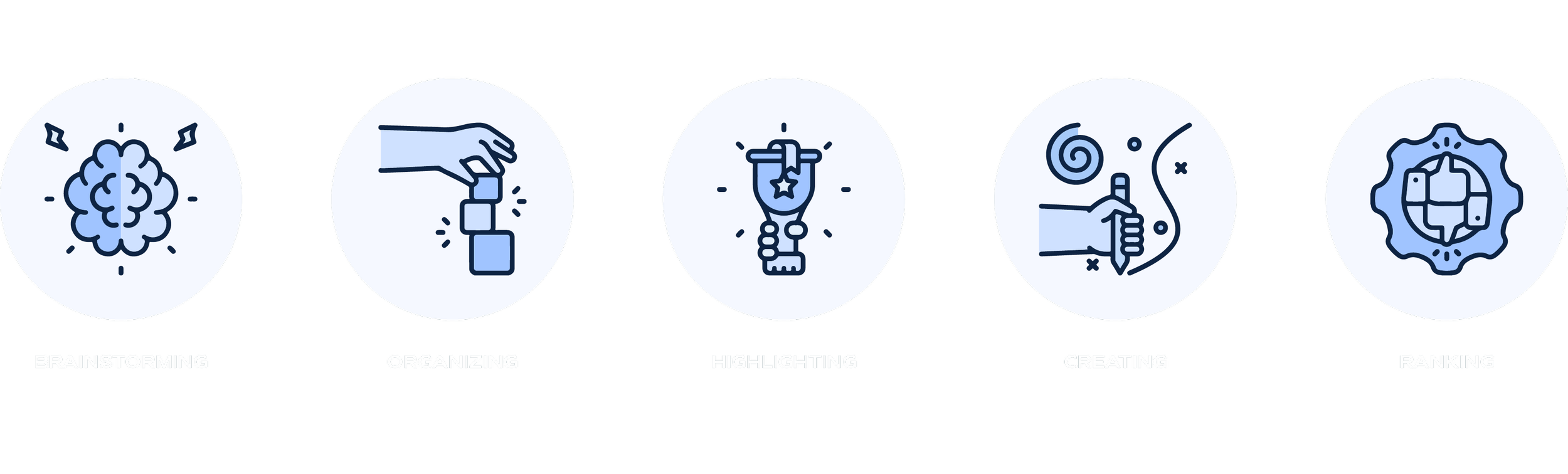
Each workshop was conducted in 2 hours and included 9 steps.
-
Group introductions and brief explanation of the project objectives and goals.
-
The participants were asked to come to the workshop with a list of things they do to prepare for race day, as well as technologies they use in training. They shared their lists with each other.
-
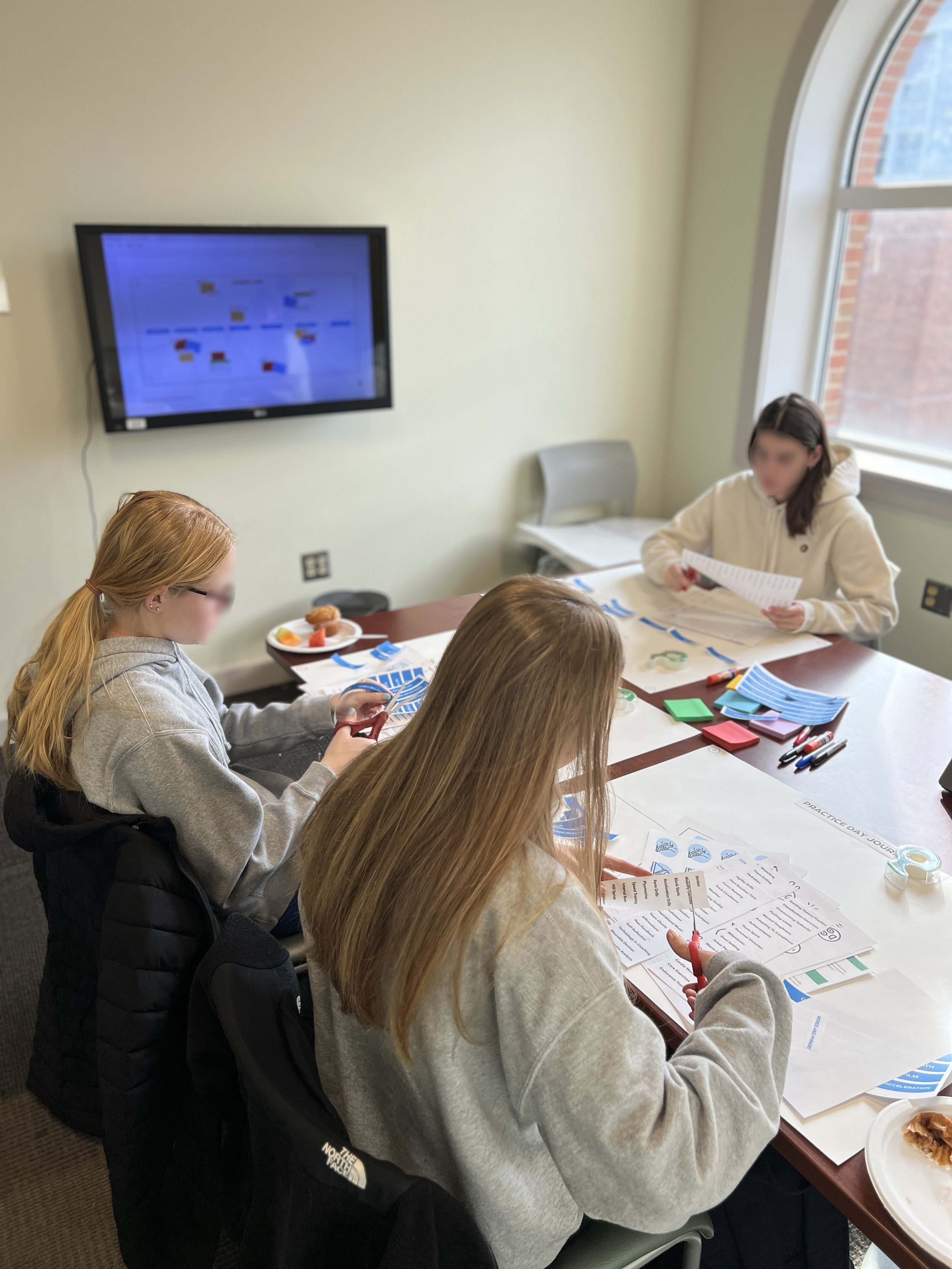
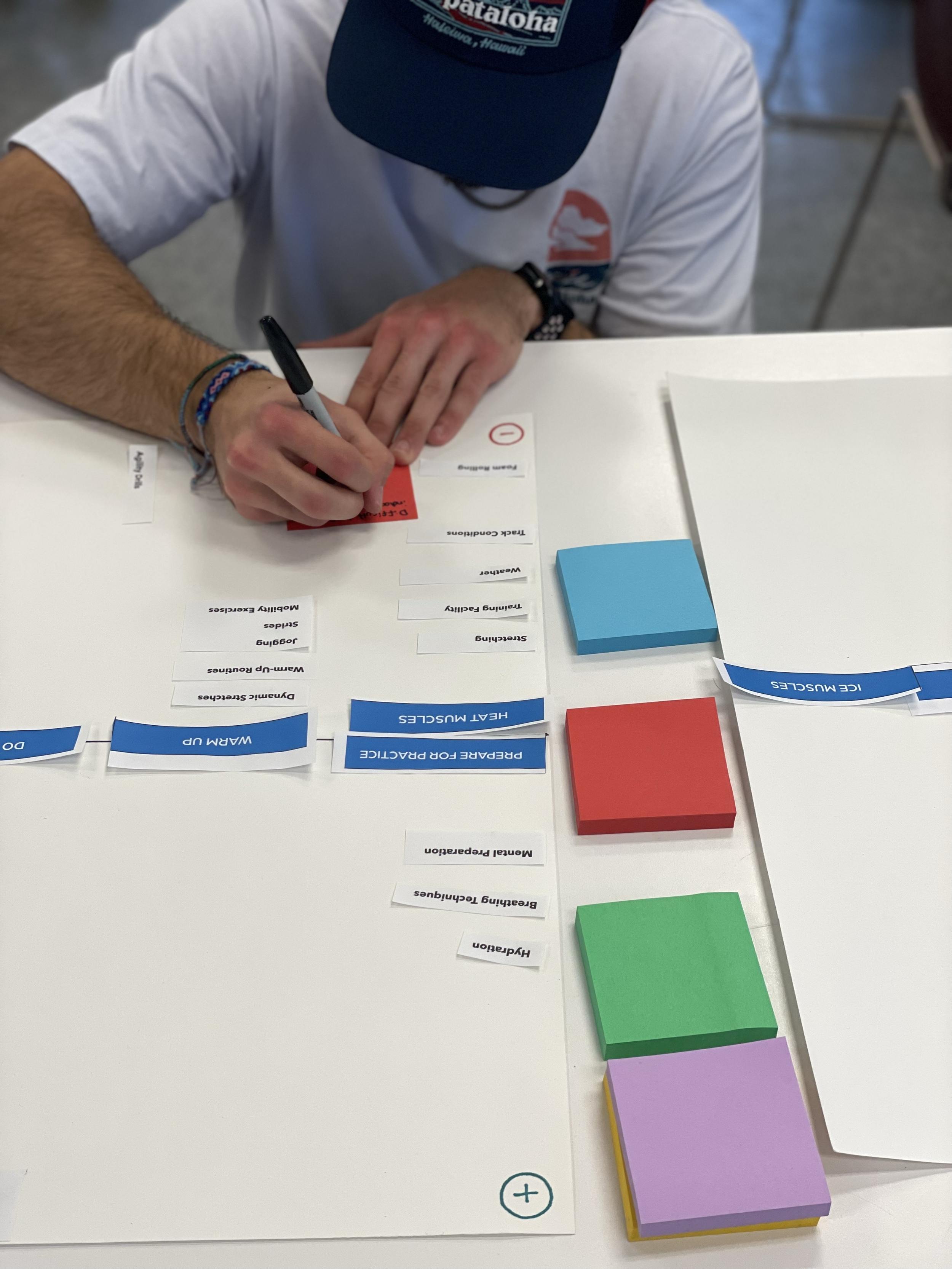
Participants, working individually, utilized pre-selected materials to craft a timeline that captured the nuances of a day at practice. They pinpointed specific activities, recognized pain points, ideated opportunities for improvement, and recorded the emotional highs and lows at each stage of the timeline.
-
Participants had the opportunity to share and describe their individual timelines with the group.
-
Participants had the opportunity to review their timelines and those of others, indicating which pain points resonated most with them by using stickers to mark those points.
-
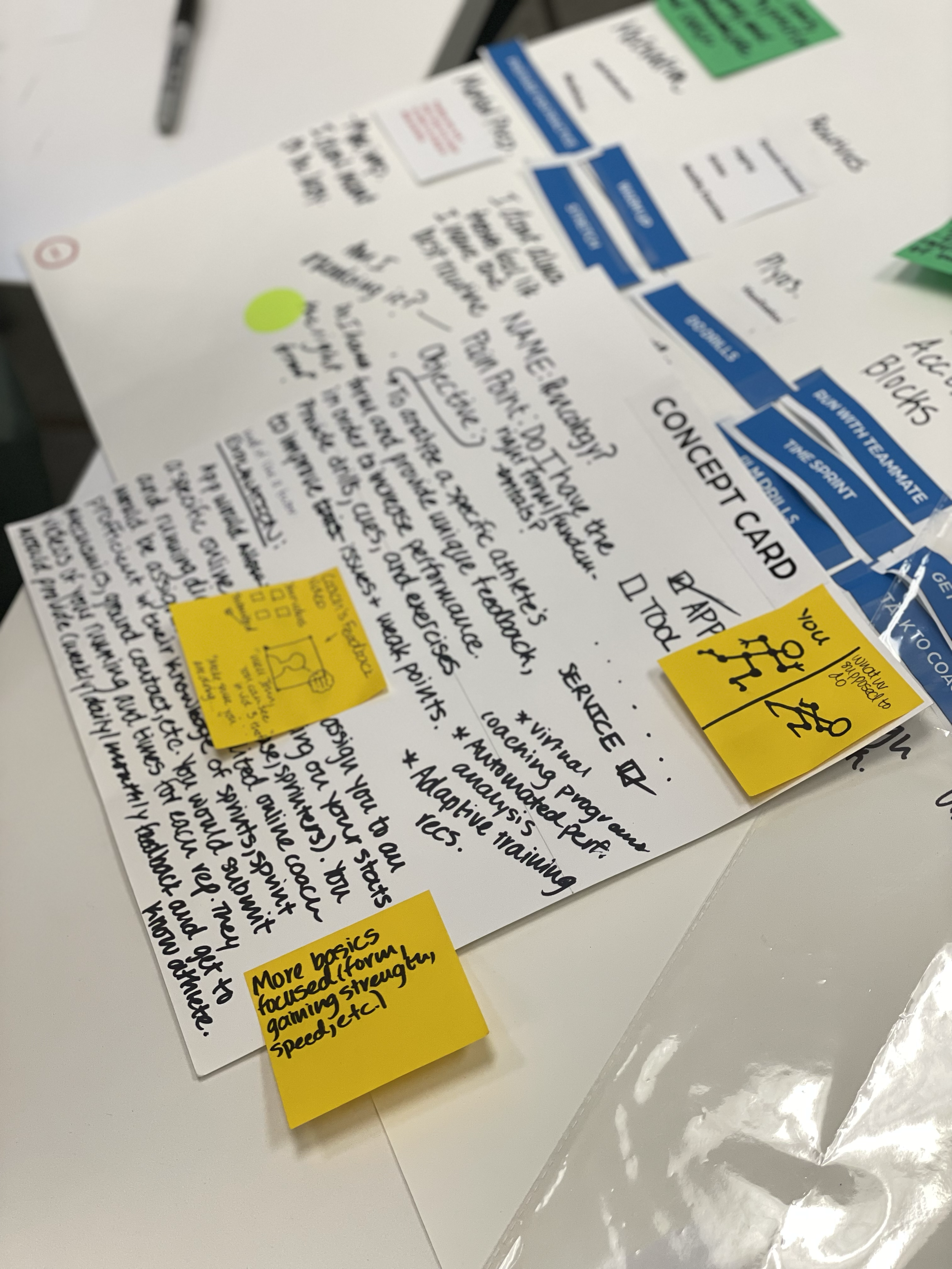
Participants used pre-selected materials to create concepts that addressed a chosen pain point, tailored to their track-related technological needs and aspirations. They named their concepts, defined the objective and structure, and either visualized their ideas or provided a written description.
-
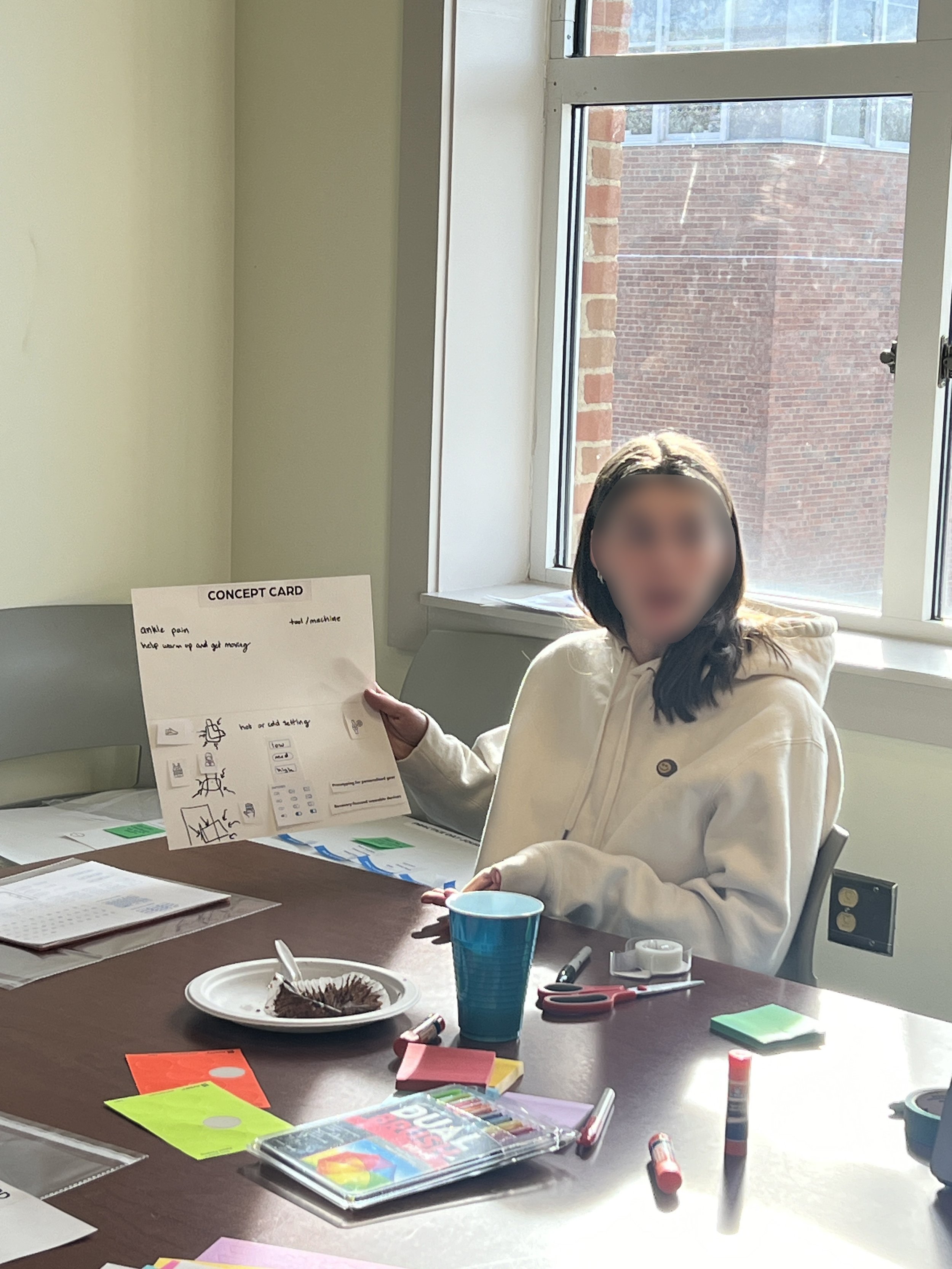
Participants had the opportunity to present and explain their Concept Card to the rest of the group.
-
I introduced a pre-developed concept (Phaze Runner app) designed to address track sprinters' needs. The purpose of this was to spark discussion, get feedback and encourage participants to compare their own concepts with my proposal.
-
As a group, participants were asked to rank all the presented concepts, including their own and mine, based on perceived value, relevance, and alignment with their personal aspirations.
journey mapping
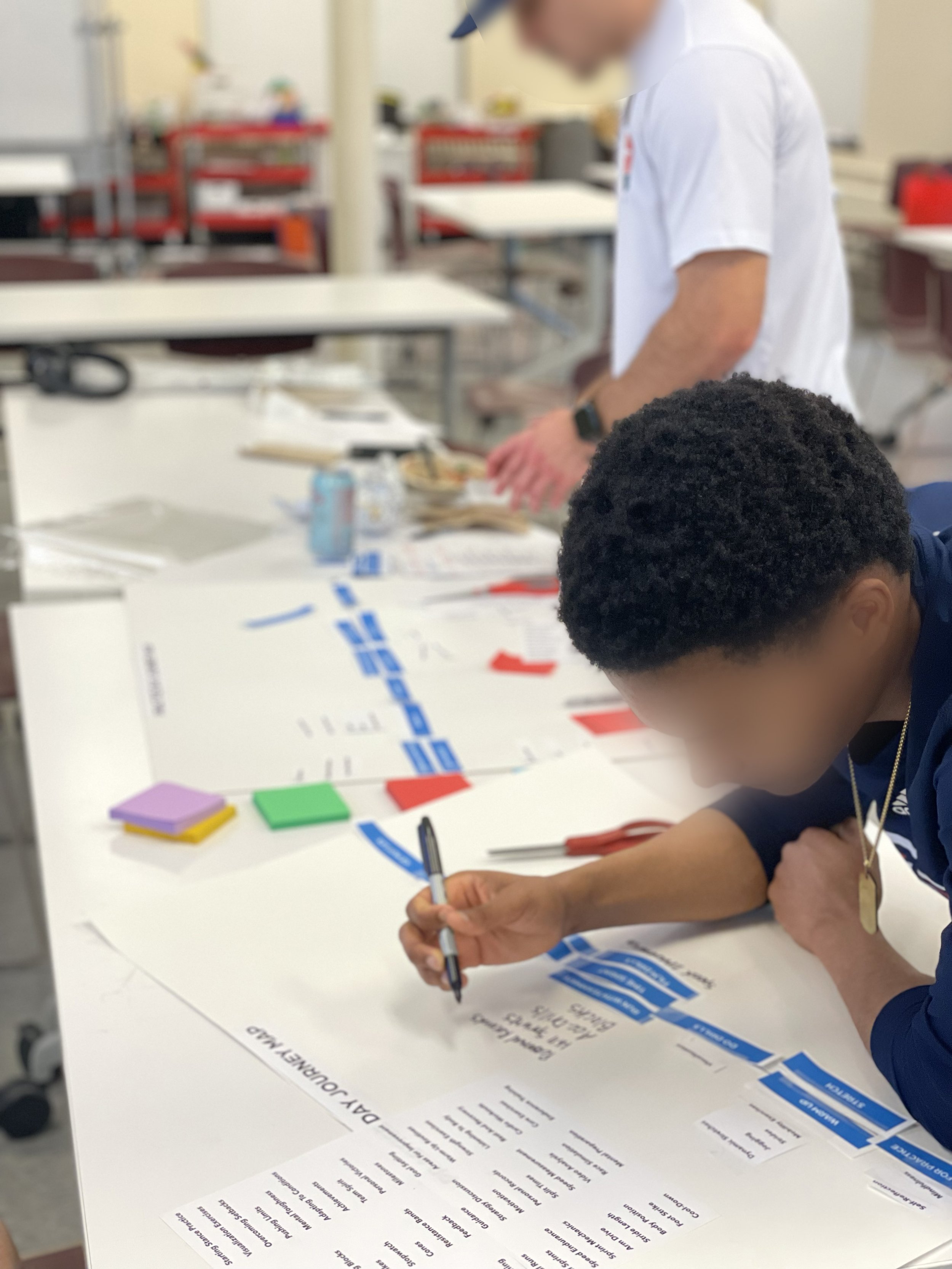
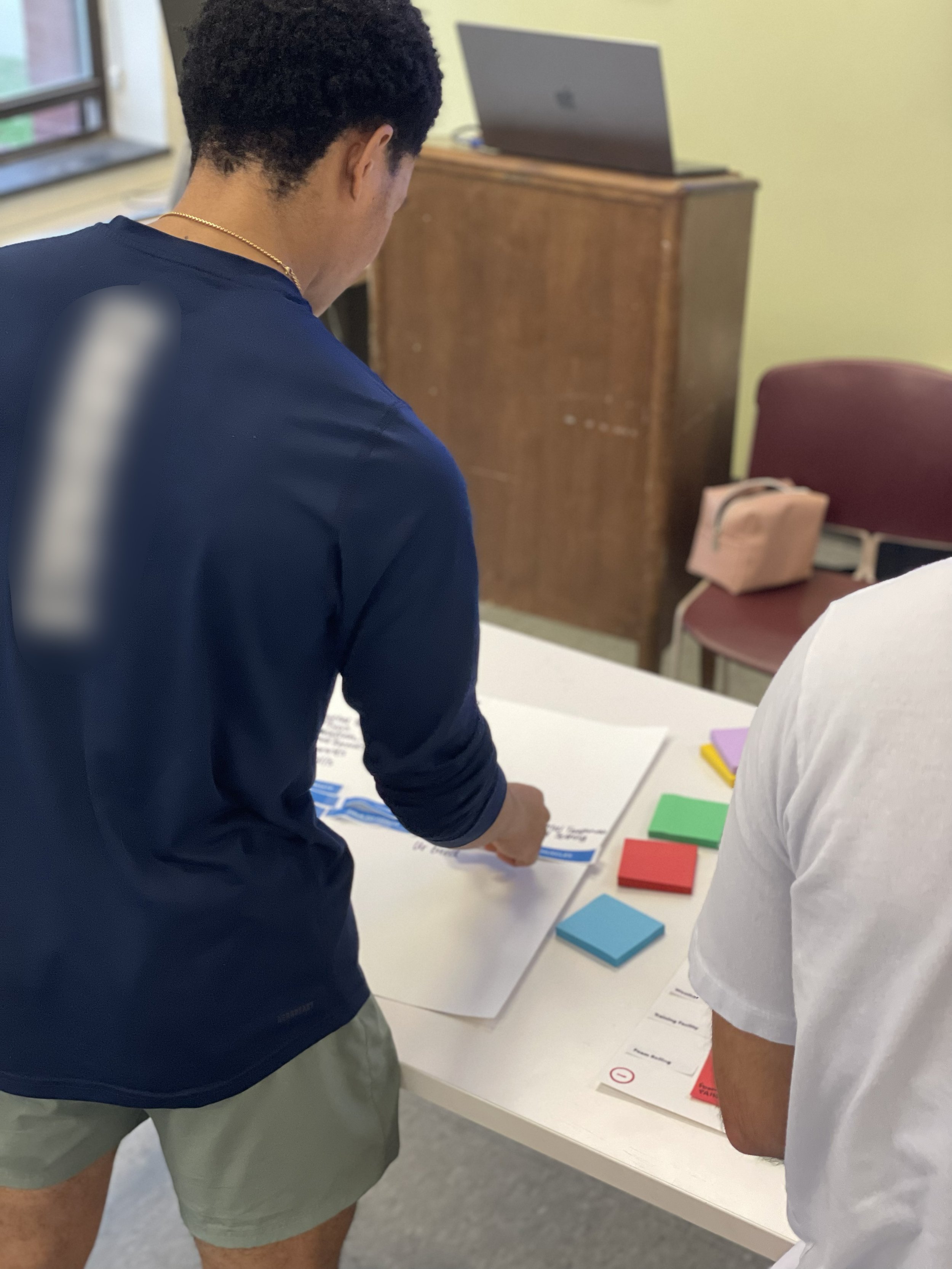
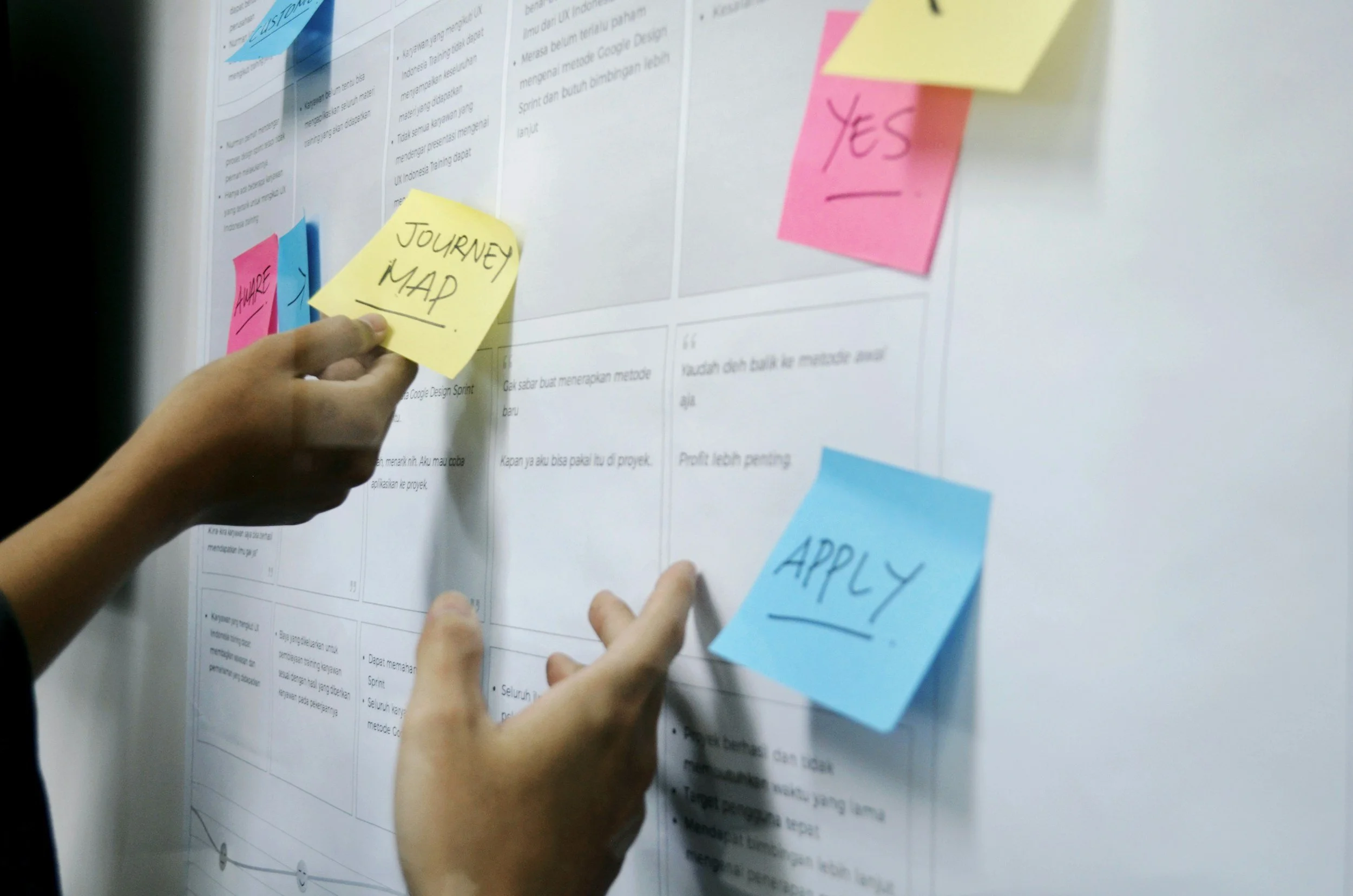
The sprinters were tasked with creating a journey map based on a typical practice day or a session preparing for a track meet. Each map outlined their activities in sequential order, and participants added depth to each step using items from the toolkit (see journey map toolkit). To reflect how positive or negative their experiences were, they positioned these details higher or lower on the page, creating a visual representation of their practice journey.
Example journey map shown to participants during instructions for the journey mapping activity

concept
cards
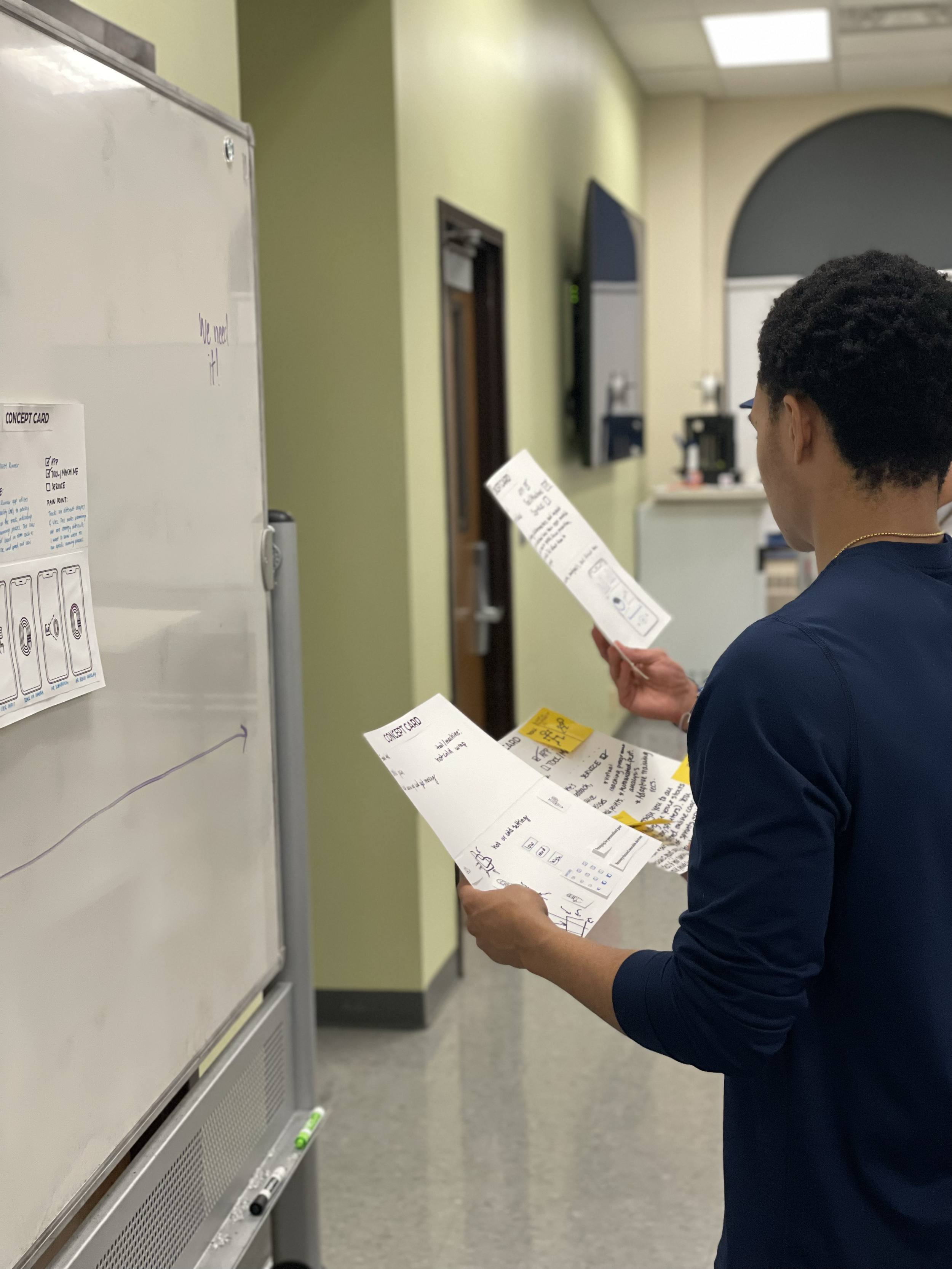
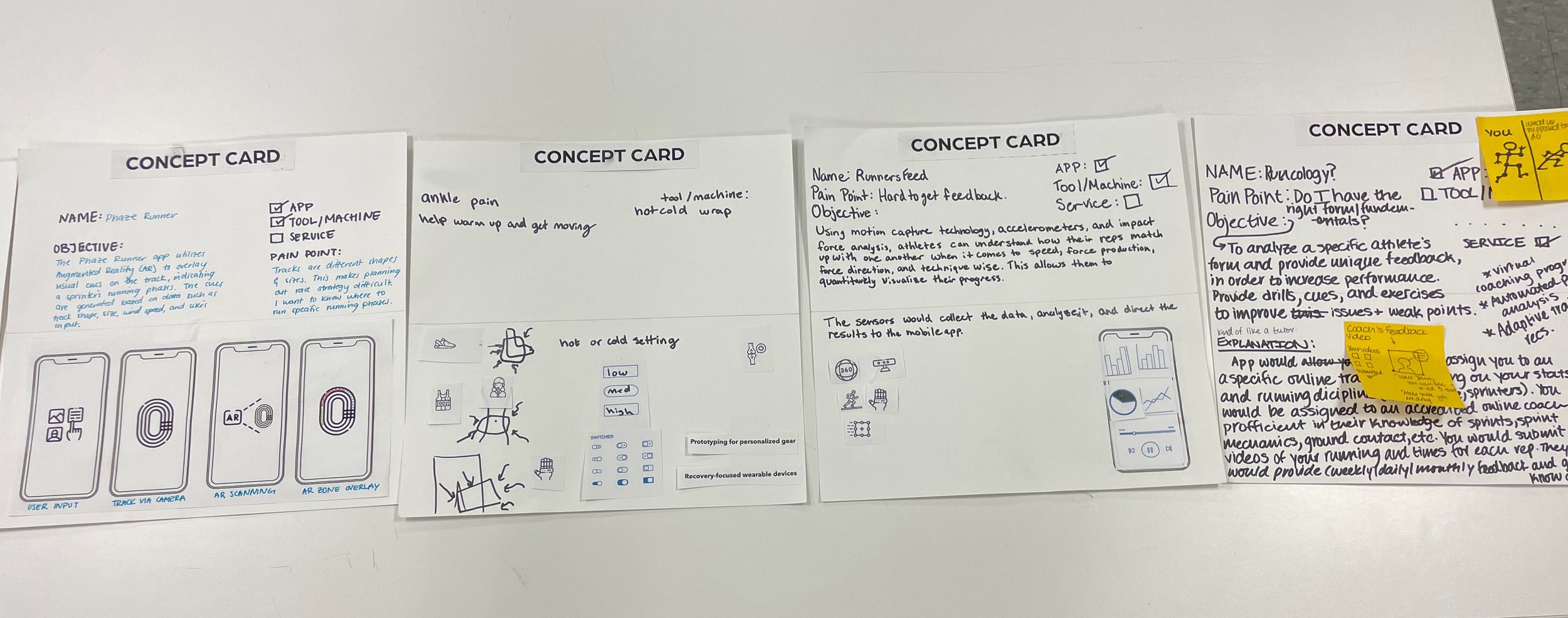
After presenting their journey maps and selecting a pain point to address, each sprinter received a concept card to spark creative and innovative solutions for their chosen challenge. Armed with a toolkit (see concept card toolkit) for inspiration, they had everything they needed to bring their ideas to life. The sprinters identified their pain points, specified whether their concept was an app, tool, machine, or service, and defined its objective. Below the line, they had space to illustrate or describe their concept in greater detail.
After each sprinter presented their concept, I took the opportunity to share my pre-existing concept, which I had visualized on a similar concept card. I then opened up my idea for feedback, inviting the same level of critique and collaboration.
Blank concept card


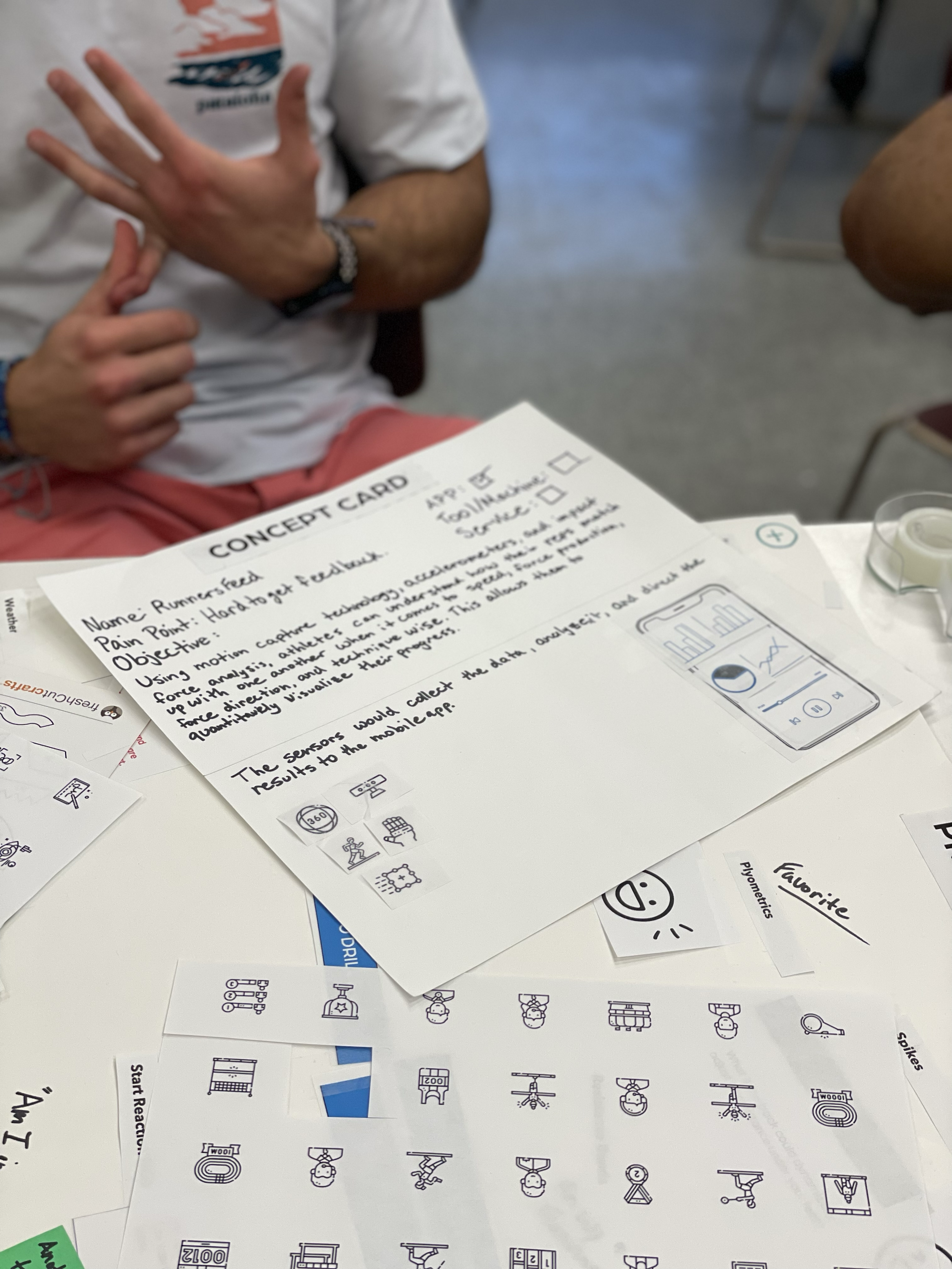
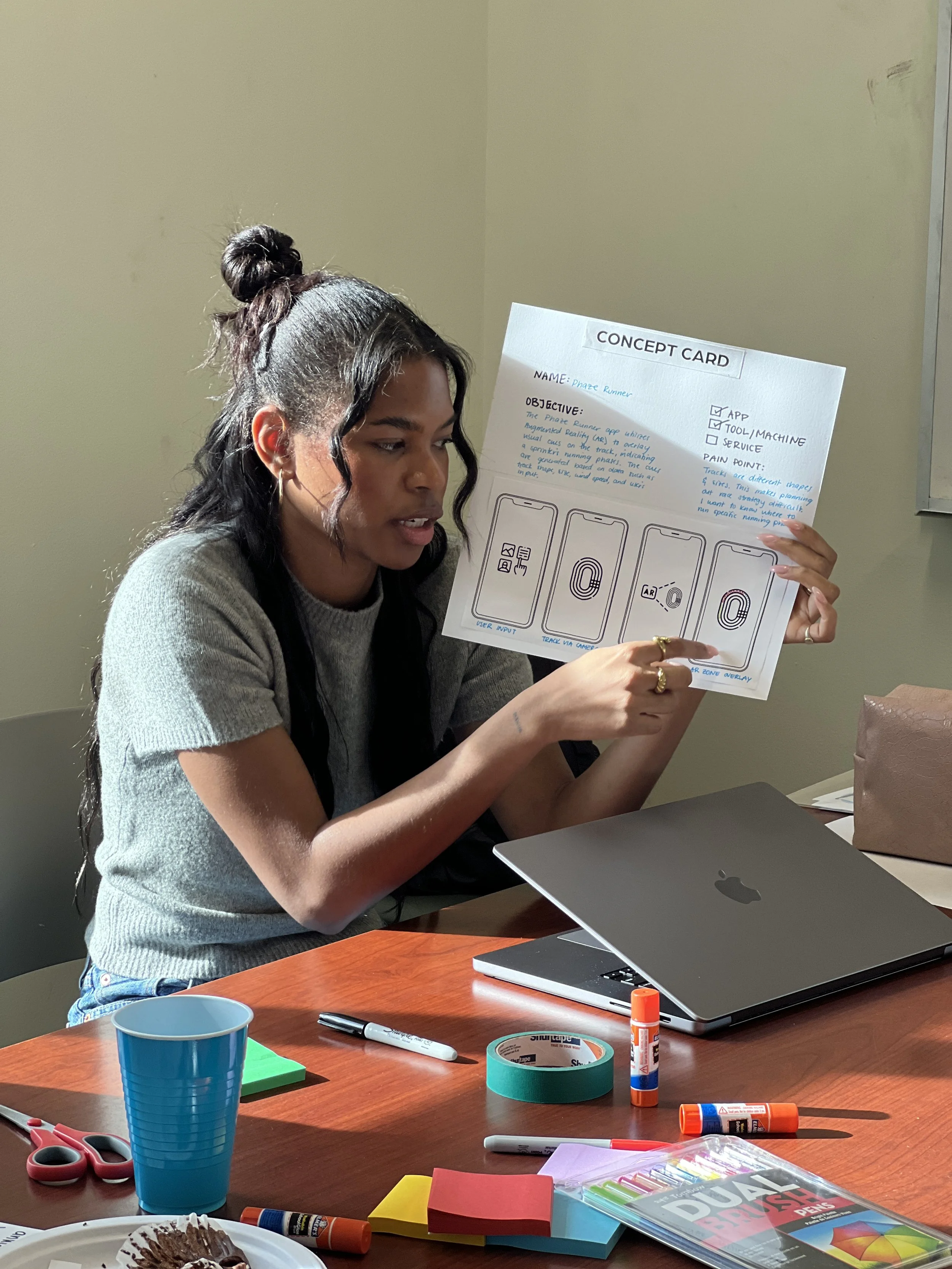
SPRINTERS' CONCEPTS
-
![]()
GET ON TRACK
-
![]()
SMART TRAINING STARTING BLOCK
-
![]()
PHAZE RUNNER
-
![]()
HOT/COLD WRAP
-
![]()
RUNNERS FEED
-
![]()
RUNCOLOGY

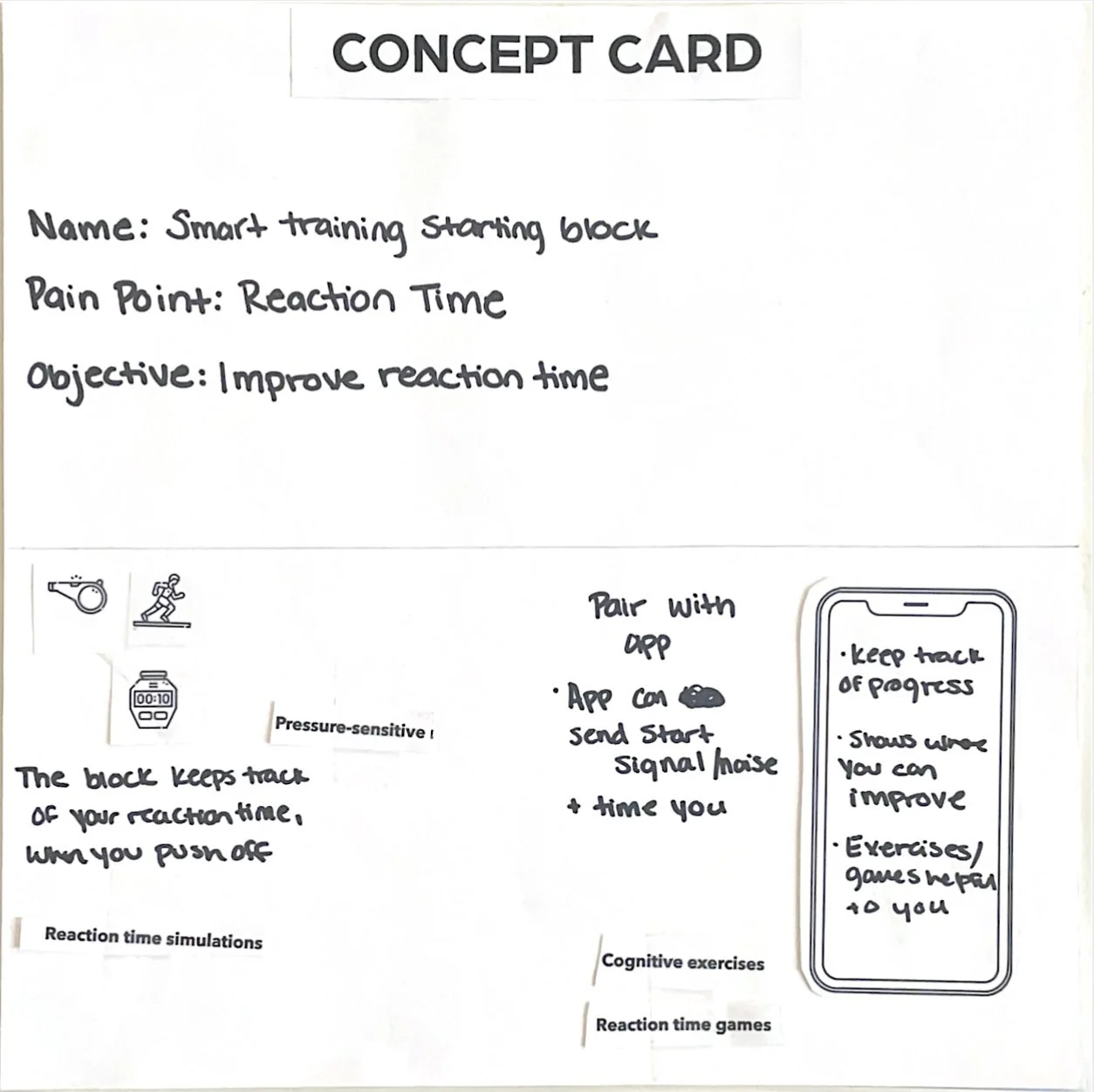


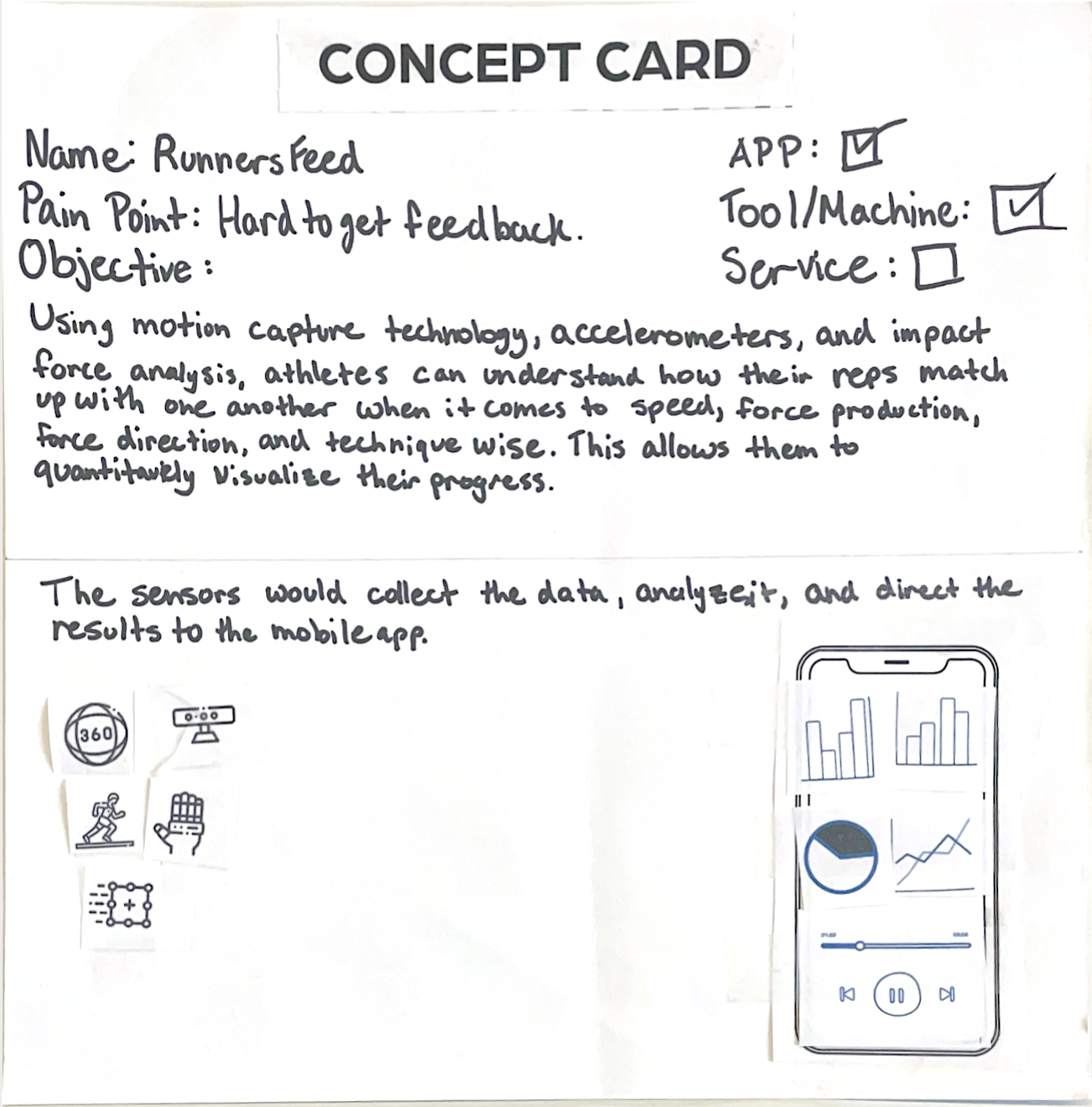

concept ranking
Finally, the group collaborated as a team to rank all the concepts, including my own, based on their perceived value and relevance. Because no concept was a bad concept, they were encouraged to consider whether they could envision the concept being implemented (lower rank) or if they felt it needed to be implemented (higher rank). Given that each concept was personal to the sprinters’ experiences, I reminded them that they were in a safe and collaborative environment, where rankings were meant to foster insight for my research rather than offense.
Runcology was the highest-ranking concept. The Ohio State Run Club does not have coaches and relies on captains to lead workouts and training. Having access to feedback and training from an accredited sprint coach addresses a need for sprinters of all levels of experience, which was most important to the participants.


NEXT STEP
After two successful workshops I needed to study the journey maps, listen to the audio, and analyze the findings.
-
BACK
-
HOME
-
FORWARD